What did AI actually solve?
AI extended earlier warnings to rivers with little local monitoring. Forecasts are an additional warning signal; local emergency instructions still determine what to do.
What changed
Traditional river models work best where years of local gauge data are available. The AI model learned patterns across many watersheds, then transferred that knowledge to places with little or no gauge history.
For extreme river events, forecasts made as much as five days ahead were as reliable as—or more reliable than—same-day estimates from a leading global system. The researchers tested the model across both unseen locations and unseen time periods. 01 / Source noteGlobal prediction of extreme floods in ungauged watershedsNature · 2024What the source supportsGlobal out-of-sample evaluation · 5,680 streamflow gaugesKeep in mindA river forecast is not the same as a street-level prediction. Local rainfall, drainage, levees, flash floods, and official evacuation guidance still matter.Read the original source ↗
What this could change for you
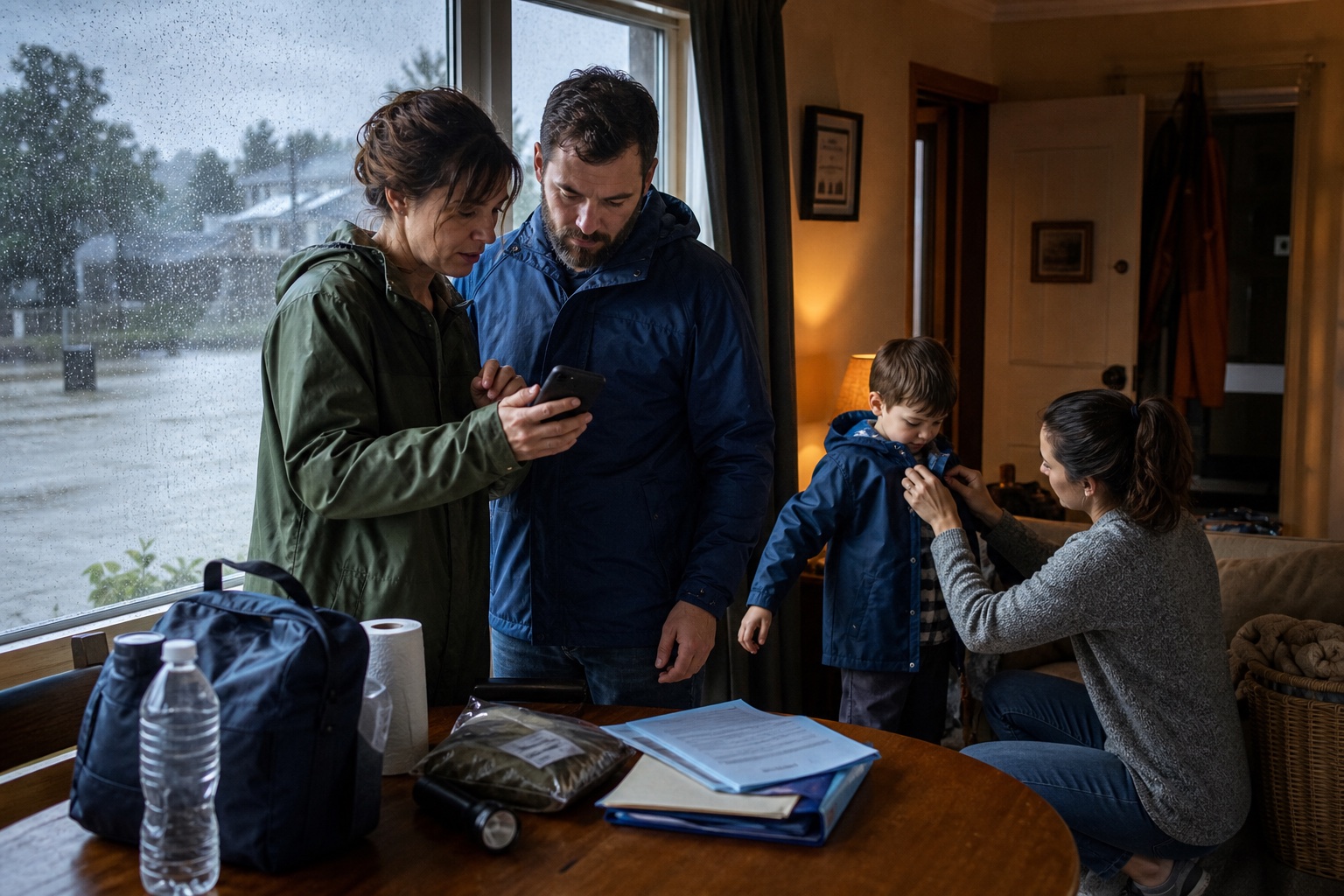
More lead time can mean an extra window to move a car, protect medicine and documents, check on neighbors, or leave before roads close.
This is not only a paper result. The work fed into a free operational warning system covering more than 80 countries, including areas that historically lacked detailed river monitoring.
From research to everyday use
Can you use this yet?
This brief establishes a result in the study’s setting. A consumer-ready version has not been verified here. Applying the finding elsewhere would require access to the relevant tools or data and testing under those conditions.
Check the study’s limitsWhat it does not prove
A river forecast is not the same as a street-level prediction. Local rainfall, drainage, levees, flash floods, and official evacuation guidance still matter.
Model skill varies by watershed. The researchers explicitly call for more shared streamflow data to improve coverage and reliability.
Primary research
Global prediction of extreme floods in ungauged watersheds
Nature · 2024 · DOI 10.1038/s41586-024-07145-1