What did AI actually solve?
This is unusually strong evidence for medical AI: a large randomized trial in a real screening program, with better sensitivity and no loss of specificity. The change is ready for health systems to evaluate—not for patients to use on their own.
What changed
In Sweden's MASAI trial, mammograms were either read in the usual way by two radiologists or triaged by an AI system. Lower-risk AI cases received one radiologist read; the highest-risk cases received two reads, with AI marks available as decision support.
The AI-supported group reached 80.5% sensitivity, compared with 73.8% for standard double reading. Specificity was 98.5% in both groups. The rate of cancers diagnosed between screening rounds was non-inferior: 1.55 per 1,000 participants with AI support versus 1.76 per 1,000 with standard reading. 01 / Source noteInterval cancer, sensitivity, and specificity comparing AI-supported mammography screening with standard double reading without AI in the MASAI studyThe Lancet · 2026What the source supportsRandomized population trial · 105,915 participants analyzedKeep in mindThis was one organized Swedish screening program using a particular commercial system. Results may not transfer unchanged to every country, clinic, mammography machine, or population.Read the original source ↗
What this could change for you
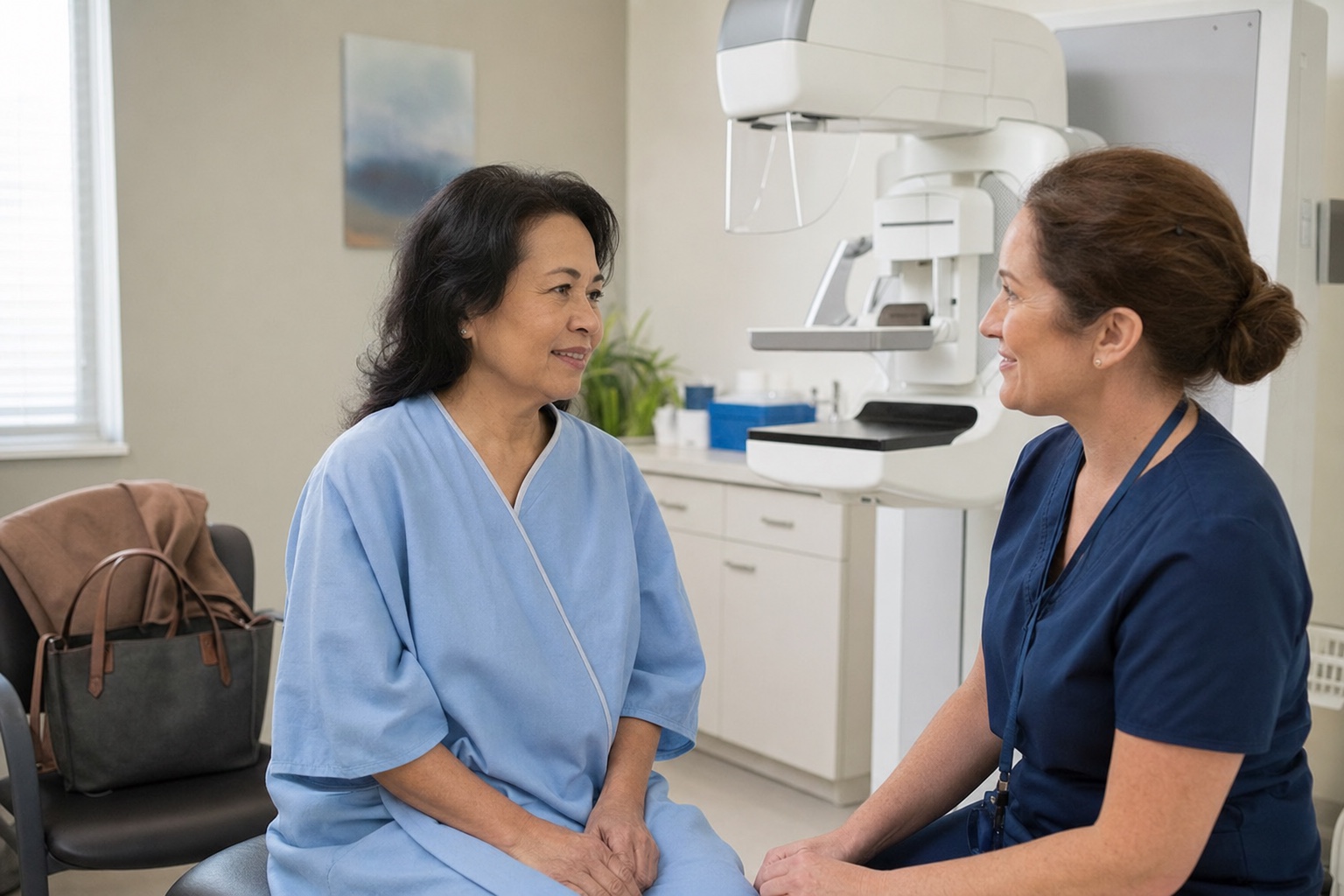
For a person getting a routine mammogram, the useful change is not an AI diagnosis. It is a better second set of eyes inside the screening workflow, with radiologists still making the decision.
The result also matters for access. Earlier MASAI analyses found that this setup reduced screen-reading workload while detecting more cancers, which could help screening programs use scarce specialist time more effectively.
From research to everyday use
Can you use this yet?
This brief describes research in a specific clinical setting. Use in your care depends on the equipment, local approvals, and clinical team; the study alone does not establish that it is available or appropriate for you.
Check the study’s limitsWhat it does not prove
This was one organized Swedish screening program using a particular commercial system. Results may not transfer unchanged to every country, clinic, mammography machine, or population.
The trial measured screening performance, not whether AI support reduces breast-cancer deaths. It does not support uploading a mammogram to a general-purpose AI tool or skipping a radiologist.
Primary research
Interval cancer, sensitivity, and specificity comparing AI-supported mammography screening with standard double reading without AI in the MASAI study
The Lancet · 2026 · DOI 10.1016/S0140-6736(25)02464-X