What did AI actually solve?
AI did not solve ecommerce. It solved a narrower and more useful problem: helping shoppers start product search with a relevant hint. In this randomized field experiment, broad trending prompts and tailored personalized prompts both lifted purchases and spending, while niche prompts mostly failed. The honest takeaway is that AI looks strongest here as light-touch search guidance, not as a substitute for shopper judgment.
What changed
Searching a giant online catalog sounds simple until you actually do it. A shopper often knows the rough category they want but not the exact words the store expects. That leaves a small but familiar friction point at the top of the page: what do you type first when the inventory is huge and the options blur together?
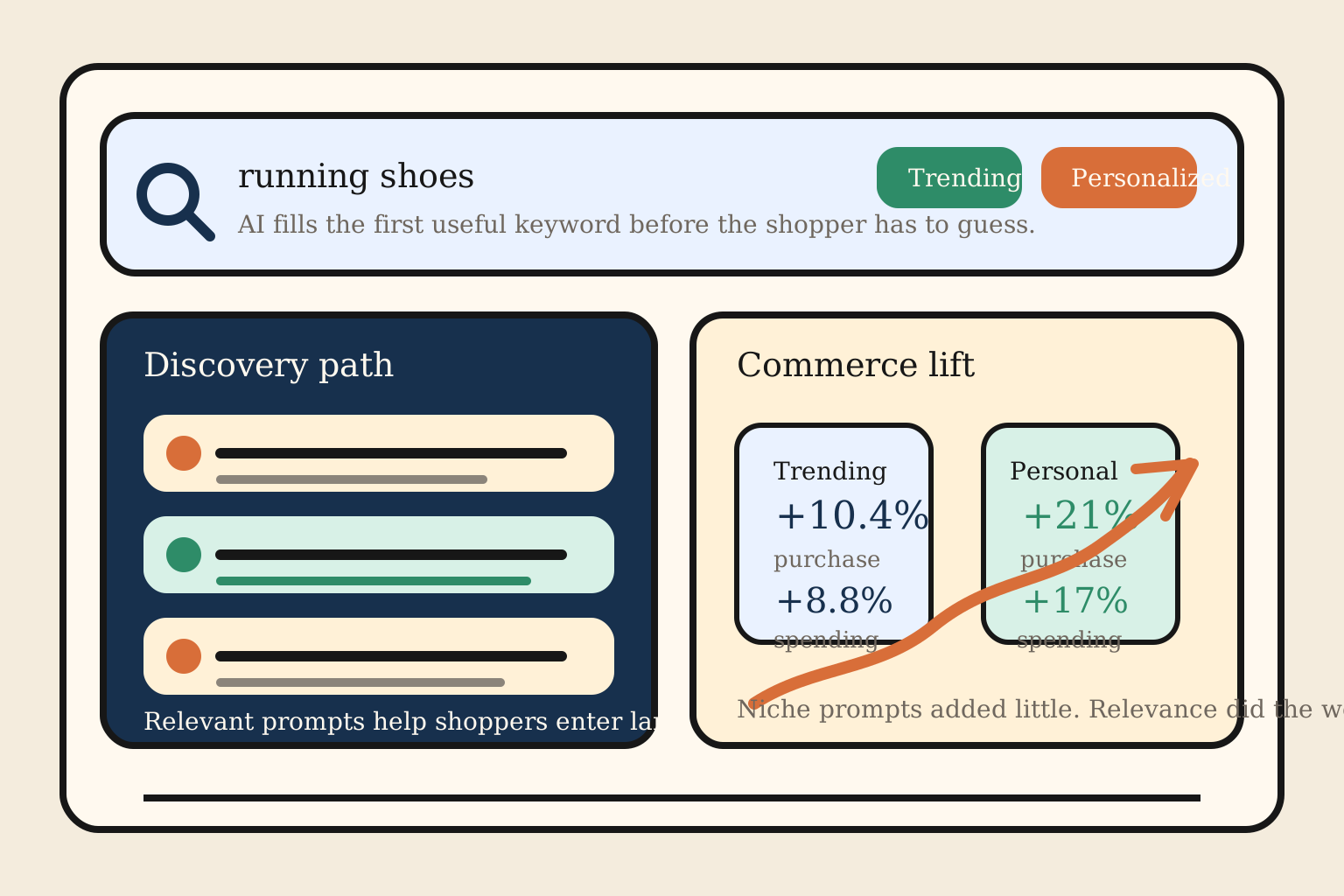
This paper tested whether AI can improve that first move without taking over the whole shopping experience. Researchers ran a randomized field experiment on a large ecommerce platform involving 72,587 consumers. Some shoppers saw an empty search bar, while others saw one prepopulated with either trending keywords, personalized keywords based on recent browsing, or niche keywords linked to a specialized subcategory. 01 / Source notePrepopulating Search Bars with Keywords: Impacts on Search and Sales in Digital MarketsMarketing Science · 2025What the source supportsMain result: Trending prompts raised purchase incidence 10.4% and spending 8.8%; personalized prompts raised them 21.0% and 17.0%Keep in mindThis was one large ecommerce platform in one experimental setting. The paper does not show that the same keyword effects will transfer unchanged to every retailer, every product category, every language, or higher-stakes purchases where shoppers want more comparison and less nudging.Read the original source ↗
The strongest broad result came from relevance without overreach. Trending keywords increased purchase incidence by 10.4% and spending by 8.8% relative to the empty-bar control. The paper also reports that trending prompts did not meaningfully cannibalize shoppers' own keyword searches or other browsing paths. In plain English, a useful hint at the start of search helped more people buy without obviously replacing exploration.
Personalized keywords worked even better on topline commerce outcomes, raising purchase incidence by 21.0% and spending by 17.0%. But that version came with a narrower behavioral pattern: shoppers entered fewer of their own keywords because the prompt was already steering them toward a likely category. Niche keywords, by contrast, produced little meaningful improvement. The study's lesson is therefore not that any AI-generated prompt helps. It is that relevance and breadth matter.
What this could change for you
For shoppers, this is a believable low-stakes use case for AI in commerce. The system did not negotiate prices, generate fake urgency, or try to become an autonomous shopping agent. It simply helped people start the search with a relevant phrase. When the prompt matched what shoppers plausibly wanted, they got to useful products faster.
For retailers and marketplaces, the practical takeaway is narrower than "personalization wins." The search bar itself is part of the product. A well-chosen trending prompt can help discovery while leaving room for shoppers to keep exploring on their own. A personalized prompt can drive even larger immediate purchases, but it also shapes the path more aggressively. That makes prompt design a tradeoff, not a one-way optimization target.
The broader AI lesson is that interface assistance can matter before a model ever answers a question in full sentences. Some commercial gains may come from helping users make one better first step inside a messy digital workflow. That is a much more defensible claim than saying AI solved online shopping.
From research to everyday use
Can you use this yet?
This brief establishes a result in the study’s setting. A consumer-ready version has not been verified here. Applying the finding elsewhere would require access to the relevant tools or data and testing under those conditions.
Check the study’s limitsWhat it does not prove
This was one large ecommerce platform in one experimental setting. The paper does not show that the same keyword effects will transfer unchanged to every retailer, every product category, every language, or higher-stakes purchases where shoppers want more comparison and less nudging.
The headline outcomes were purchase incidence and spending, not long-term satisfaction, product fit, lower return rates, or whether shoppers later felt boxed into a narrower choice set. A higher purchase rate can still be a mixed result if the products turn out to be wrong for the customer.
The result also depended heavily on the kind of keyword shown. Trending prompts and personalized prompts helped, but niche prompts did not do much. Personalized prompts also reduced shoppers' own keyword entry. That means the paper supports relevant hints at the start of search, not the blanket claim that more aggressive AI steering is always better.
Primary research
Prepopulating Search Bars with Keywords: Impacts on Search and Sales in Digital Markets
Marketing Science · 2025 · DOI 10.1287/mksc.2024.0793