What did AI actually solve?
AI made a serious global forecast faster and, on most benchmark targets, more accurate. The everyday benefit arrives when weather agencies combine that speed with physics-based models and local expertise—not when one algorithm declares the weather solved forever.
What changed
Traditional weather models calculate the physics of the atmosphere on a three-dimensional grid, a demanding job repeated many times a day. GraphCast learned from decades of weather data to predict how the global atmosphere moves from one six-hour step to the next.
In the paper's evaluation, GraphCast outperformed the European Centre's high-resolution system on more than 90% of 1,380 tested variables and forecast lead times. Once trained, it produced a 10-day global forecast at 0.25-degree resolution in less than a minute on a specialized chip. 01 / Source noteLearning skillful medium-range global weather forecastingScience · 2023What the source supportsGlobal historical benchmark · 1,380 forecast targetsKeep in mindThis was a historical forecast comparison, not proof that every local forecast app will suddenly improve. Global skill can hide important failures at neighborhood scale.Read the original source ↗
What this could change for you
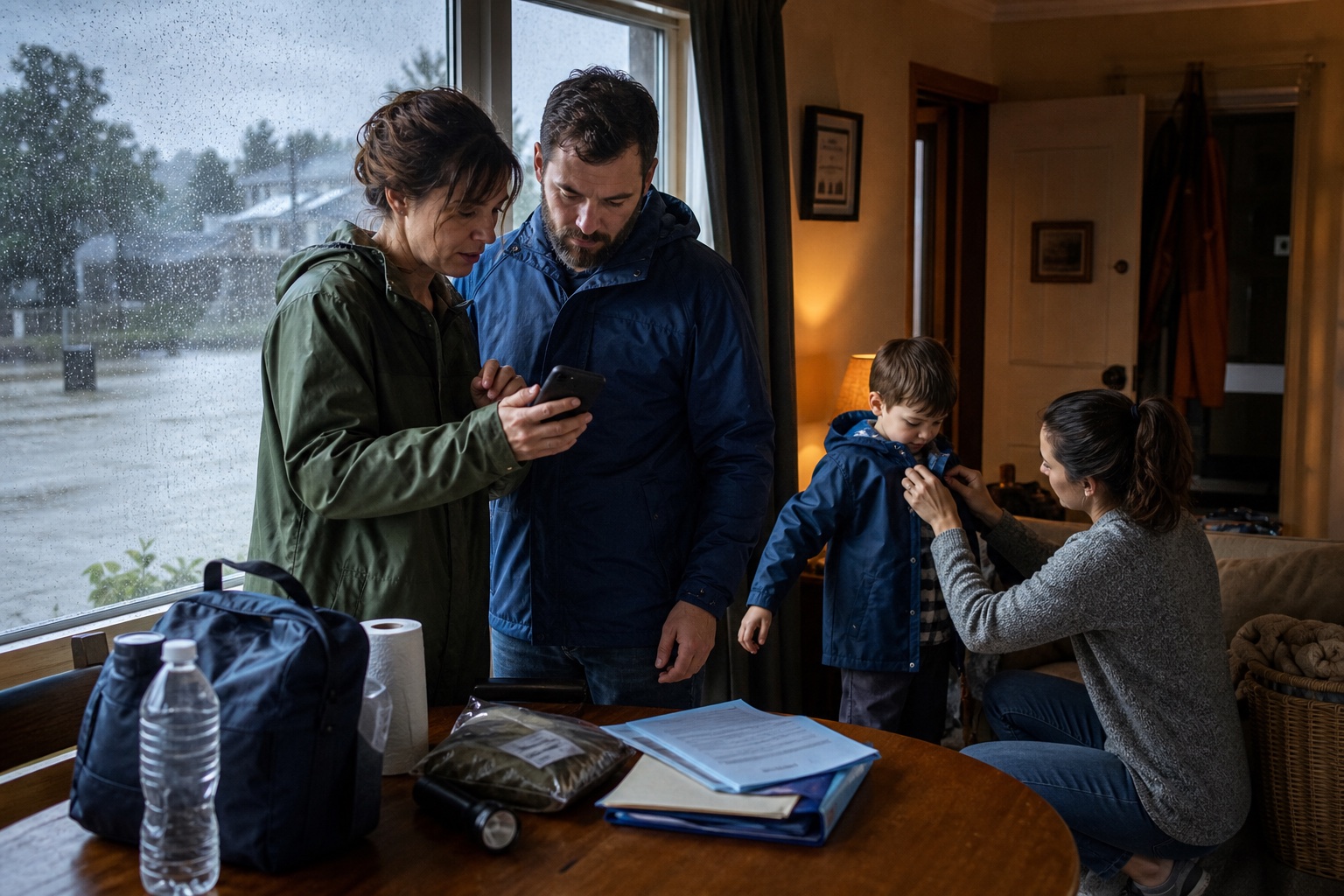
Weather affects ordinary decisions long before it becomes dangerous: when to travel, pour concrete, harvest crops, schedule crews, or move an outdoor event. A more accurate medium-range forecast gives those decisions a little more room.
Fast models can also run more scenarios for less computing cost. The likely future is not AI versus physics, but several different forecast systems checking and strengthening one another.
From research to everyday use
Can you use this yet?
This brief establishes a result in the study’s setting. A consumer-ready version has not been verified here. Applying the finding elsewhere would require access to the relevant tools or data and testing under those conditions.
Check the study’s limitsWhat it does not prove
This was a historical forecast comparison, not proof that every local forecast app will suddenly improve. Global skill can hide important failures at neighborhood scale.
The model learns from past observations and forecasts, so rare conditions outside that record remain a concern. Operational meteorologists still interpret ensembles, uncertainty, and local hazards.
Primary research
Learning skillful medium-range global weather forecasting
Science · 2023 · DOI 10.1126/science.adi2336