What did AI actually solve?
AI did not solve grocery delivery. It solved a narrower and more believable problem inside it: helping shoppers find items and move through the store faster with fewer costly misses. In this randomized Instacart field experiment, the gains were modest but real, and the paper's strongest lesson is that human judgment still mattered most when workers learned when to use the tool selectively.
What changed
Most grocery-delivery AI stories focus on recommendations, pricing, or the customer app. This paper tested a lower-level operational problem that workers and customers feel immediately: how quickly a shopper can find the right items inside a real store without missing products that later need to be refunded.
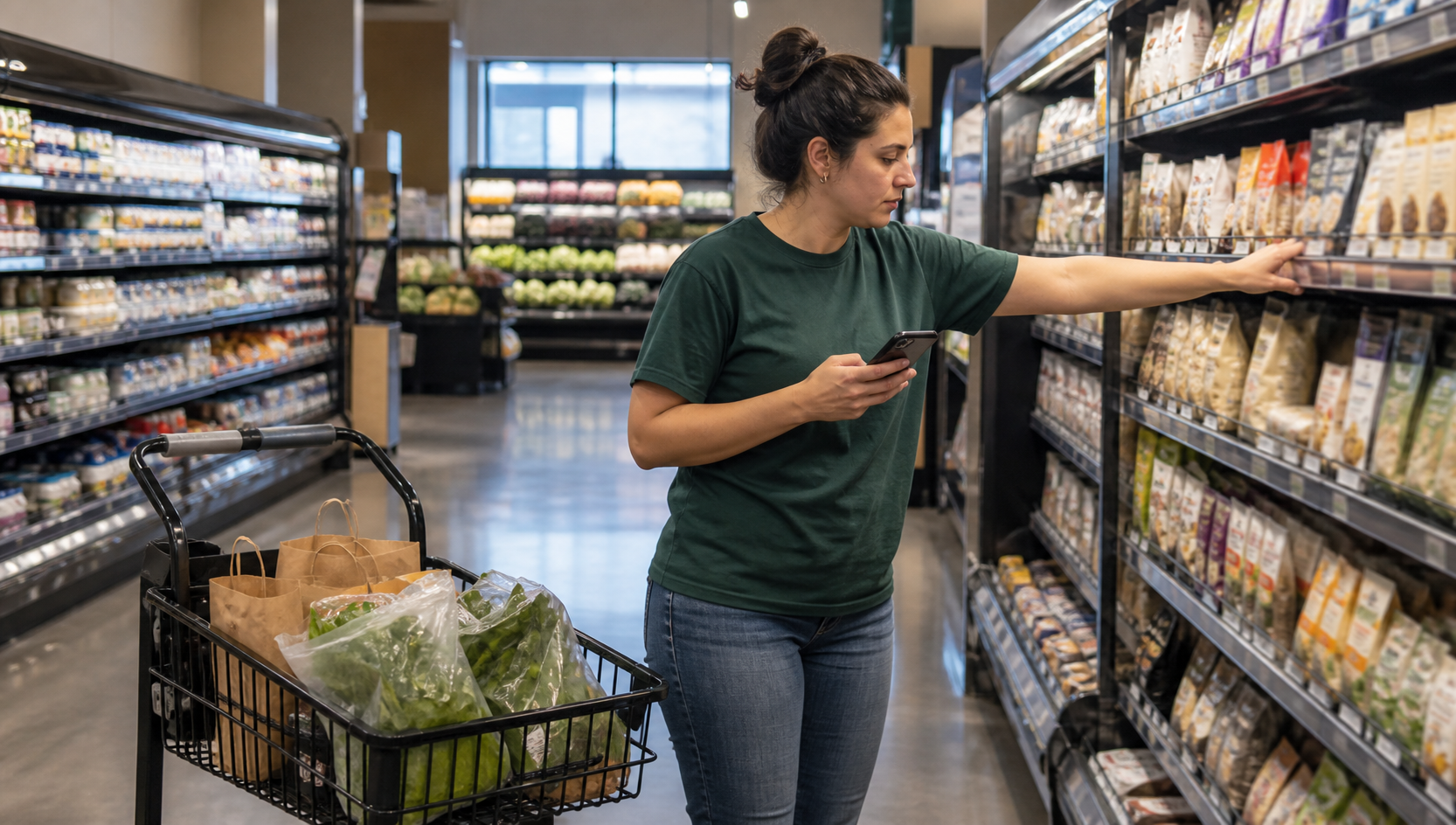
Instacart randomized access to a decision-support tool from June 2022 through September 2022. Shoppers in the treatment group saw a dynamic map with real-time item locations and an optimized picking route that updated as they moved through the store. The system combined crowd-sourced shelf-location data, deep-learning item-positioning, and a route-planning algorithm related to the traveling salesman problem. 01 / Source noteHuman-Algorithm Collaboration in Gig Work: The Role of Experience, Skill Level, and Task ComplexityInformation Systems Research · 2026What the source supportsMain result: Batch refund rates fell 0.22 percentage points and batch picking time fell 53.5 secondsKeep in mindThis was one platform, one bundled wayfinding system, and one kind of gig work. The paper does not prove that the same gains would transfer unchanged to smaller grocery operators, pharmacy picking, warehouse fulfillment, restaurant delivery, or retail stores with very different layouts and incentives.Read the original source ↗
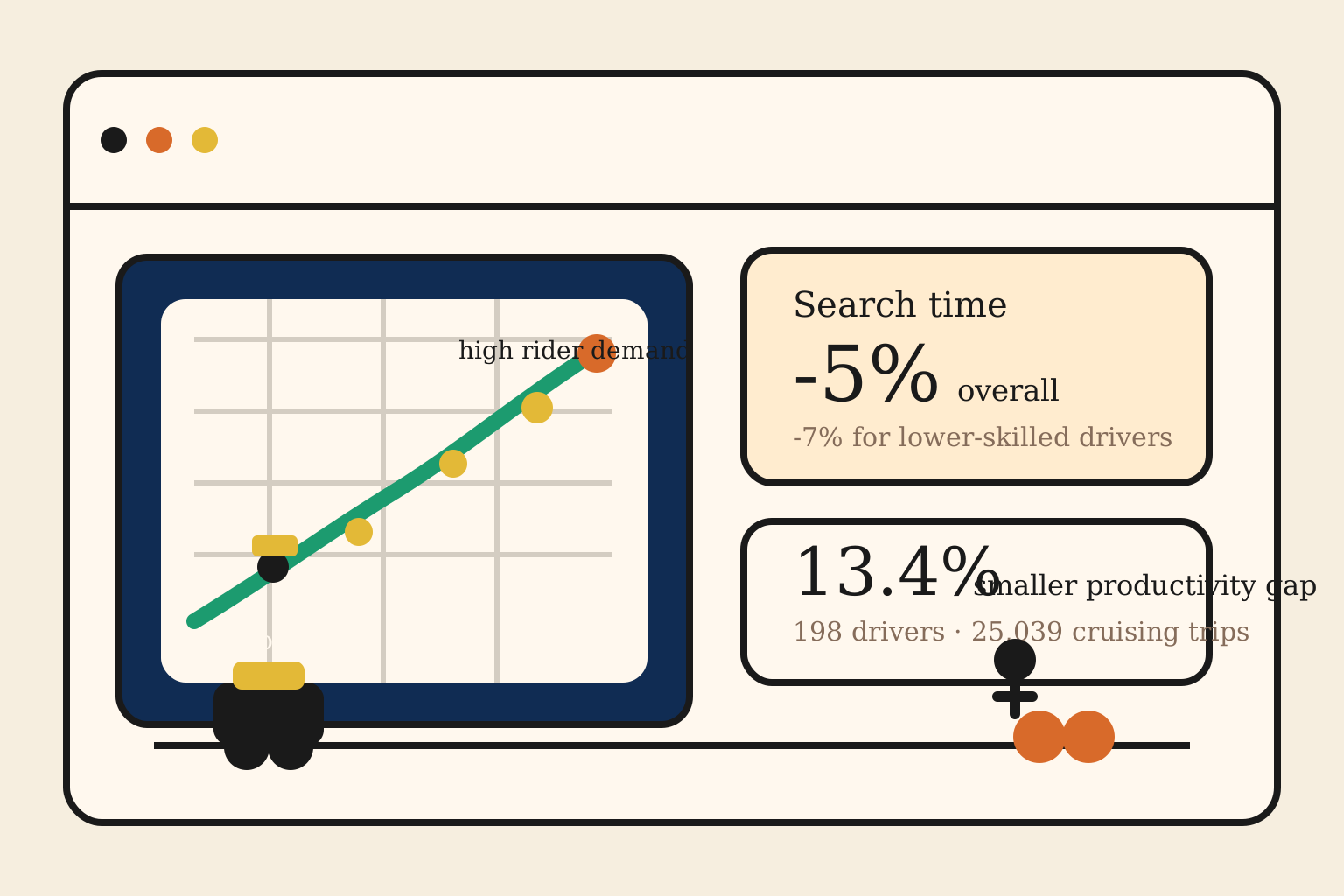
Across 139,045 fulfilled batches, the tool reduced the batch refund rate by 0.22 percentage points, a 3.83% relative improvement, and cut batch picking time by 53.5 seconds, a 3.29% relative improvement. In plain language, the system helped shoppers finish batches faster while slightly reducing the odds that an item would be missing and refunded.
The interesting part is that the gain was not uniform. Lower-skilled shoppers improved the most relative to higher-skilled workers, with the refund-rate effect 145% more pronounced and the picking-time effect 62% greater. But the paper also found that more experienced shoppers benefited more on average because they used the tool selectively. Less-experienced workers relied on it more than five times as heavily, while experienced shoppers varied their usage more from batch to batch. The authors also report a 3.16% increase in work volume on the platform and better ability to handle tasks across multiple stores.
What this could change for you
For customers, the practical upside is simple. A better in-store picking tool can make grocery delivery feel more reliable without changing anything about the front-end app. Fewer missing items and a faster picking process can translate into fewer refunded essentials and less friction around substitutions.
For gig workers and retail platforms, the paper argues for a narrower view of AI assistance. The win was not full automation of grocery fulfillment. It was a live guide that helped workers navigate large, changing stores more effectively. That matters because grocery layouts change constantly with promotions, shelf resets, and store-specific quirks that are hard to memorize perfectly.
The broader AI lesson is that workflow tools do not have to replace people to matter. Sometimes the useful gain comes from helping a worker decide when to trust the map, when to improvise, and how to move through a complicated environment with less wasted effort.
From research to everyday use
Can you use this yet?
The study tested an Instacart workplace tool. Applying the result elsewhere would require comparable store data, worker access, and a trial in that setting.
Check the study’s limitsWhat it does not prove
This was one platform, one bundled wayfinding system, and one kind of gig work. The paper does not prove that the same gains would transfer unchanged to smaller grocery operators, pharmacy picking, warehouse fulfillment, restaurant delivery, or retail stores with very different layouts and incentives.
The intervention also bundled two algorithmic components: a dynamic ML-based item-location map and a routing system. The public paper says both were part of the treatment and does not fully separate how much of the gain came from better item-location inference versus better route ordering.
The study does not answer every question workers or customers might care about most. It does not directly measure shopper earnings, long-run worker retention, doorstep delivery times, or randomized customer satisfaction. And because workers do not join the platform at random, the paper does not claim to represent all gig workers everywhere.
Primary research
Human-Algorithm Collaboration in Gig Work: The Role of Experience, Skill Level, and Task Complexity
Information Systems Research · 2026 · DOI 10.1287/isre.2024.1664