Before you read the findings
Guess the result
What happened when the platform told people to go to bed?
What did AI actually solve?
AI did not solve digital wellbeing. It solved why a sleep reminder can fail inside a learning system. In this large randomized platform experiment, a tiny ranking boost meant to reduce late-night scrolling increased usage instead, and the effect lingered after the campaign ended. The honest takeaway is uncomfortable but useful: on recommendation platforms, even a benevolent nudge can become training data for a stronger engagement loop.
What changed
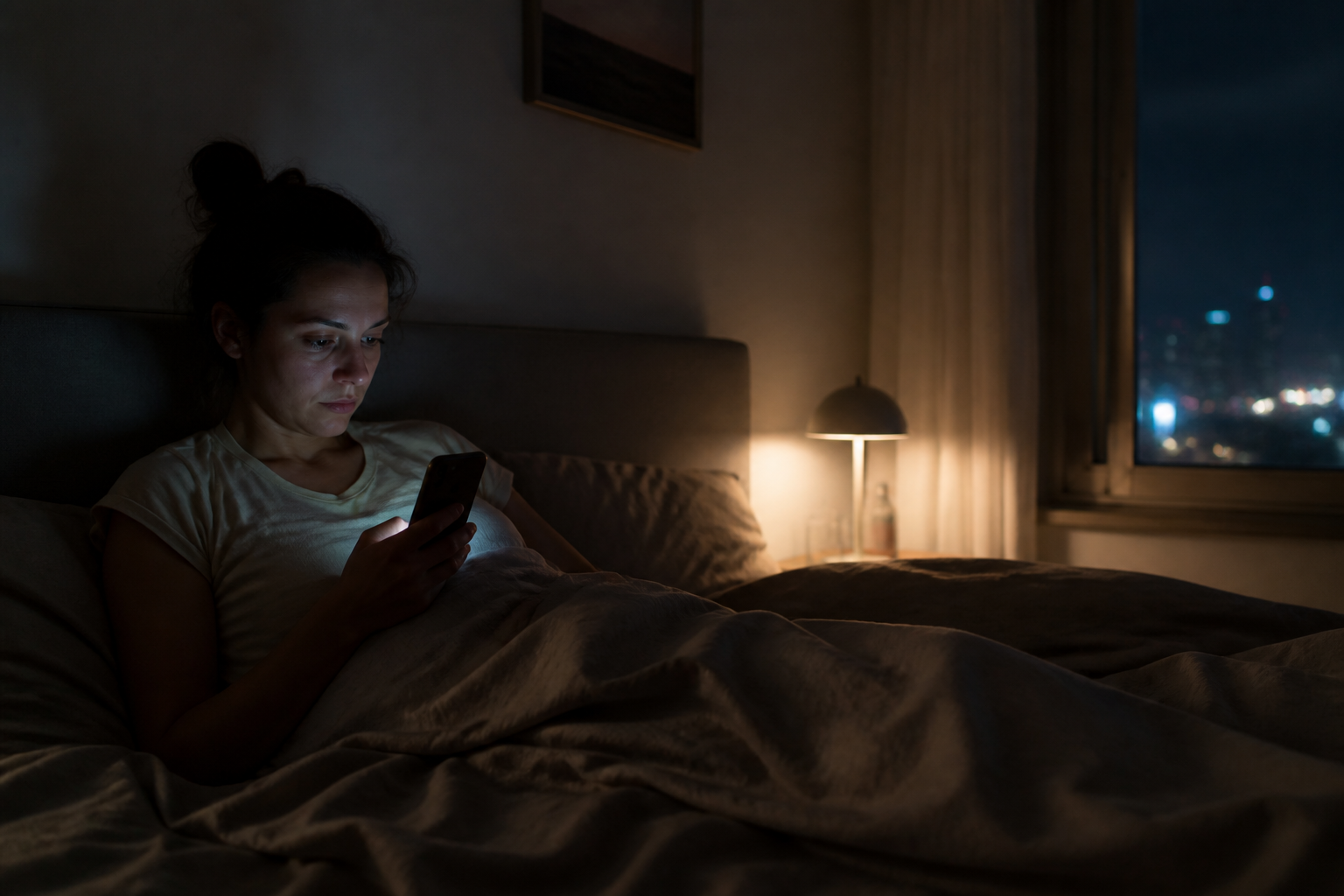
Most digital-wellbeing features get judged as if they were static nudges. This paper tested a messier reality: what happens when a recommendation system learns from the very intervention that is supposed to calm people down. The platform ran a celebrity-led sleep-reminder campaign that was meant to reduce unhealthy late-night scrolling on a major short-video app.
The experiment ran from April 29 to May 6, 2022. During the 1 a.m. to 5 a.m. window, treated users were more likely to be shown a sleep-reminder video because the platform added a small score boost to those clips in the ranking system. The manipulation was narrow. The authors estimate that it changed at most about one in 400 recommendations, or roughly 0.25% of a treated user's daily feed. 01 / Source noteUnintended Consequences of Recommender System Interventions: Evidence from a Field ExperimentarXiv · 2026What the source supportsMain result: Late-night usage rose 14.75% and total usage 2.18% during the campaign weekKeep in mindThis was one major short-video platform, one celebrity-driven reminder campaign, and one late-night use case. The paper does not prove that every digital-wellbeing reminder, every social platform, or every recommendation system will backfire the same way.Read the original source ↗
The result went in the opposite direction of the campaign's goal. Instead of reducing use, the intervention increased late-night engagement by 14.75% and total platform usage by 2.18% during the campaign week. The paper's explanation is not that reminders are always annoying or that celebrities are uniquely persuasive. It is that the intervention forced the recommender to explore a slice of user demand it had previously undersupplied, then learn from those responses.
The persistence result is what makes the paper more than a one-week curiosity. In the follow-up analyses, total app usage stayed about 0.8% to 1.0% above control through Weeks 1 to 6, and late-night usage remained roughly 3.6% to 6.9% higher through Week 8. That pattern supports the paper's claim that the recommendation policy, not just the momentary content exposure, shifted after the campaign.
What this could change for you
For ordinary users, the practical lesson is that a bedtime reminder inside a feed is not a neutral overlay on top of a platform. If the app uses the reminder to discover what else keeps you engaged, the intervention can quietly train the system to serve more of the same kind of content later. A feature that looks like digital self-control can become a better map of what holds your attention.
For platform teams and regulators, this is a warning about how to evaluate low-friction safety or wellbeing features. If the only metric is what happens during the campaign, the result is already bad here. But the more important failure is downstream. A temporary intervention can reshape the model's later recommendations and leave the platform more engaging after the supposed fix disappears.
The broader AI takeaway is that recommender systems do not just respond to policy changes; they absorb them as training data. That matters well beyond sleep reminders. Any ranking tweak meant to improve user welfare, reduce harm, or steer behavior needs to be checked for what it teaches the model next.
From research to everyday use
Can you use this yet?
This was a platform experiment, not a sleep tool you can download. A useful next step is testing reminder designs that do not reinforce the recommendation system’s engagement loop.
Check the study’s limitsWhat it does not prove
This was one major short-video platform, one celebrity-driven reminder campaign, and one late-night use case. The paper does not prove that every digital-wellbeing reminder, every social platform, or every recommendation system will backfire the same way.
The source is a preprint, not a peer-reviewed journal article. The experiment itself is randomized and unusually concrete, but the interpretation still depends on the authors' analysis of platform logs, category shifts, and post-campaign persistence rather than an externally replicated audit of the recommender system.
The study also does not show improved sleep, worse sleep, or any direct health outcome. It measures platform engagement and viewing behavior. The honest claim is that the intervention increased usage and likely retrained the recommender, not that it proved a clinical effect on sleep or addiction.
Primary research
Unintended Consequences of Recommender System Interventions: Evidence from a Field Experiment
arXiv · 2026 · DOI 10.48550/arXiv.2606.08265