What did AI actually solve?
This is the kind of AI progress that matters more than a flashier demo. The system did not eliminate chatbot mistakes. It improved what happened after the mistake, which is where many real customer experiences fall apart. In a randomized field experiment at a large insurer, collaborative repair made breakdowns more likely to be resolved and less likely to end in immediate abandonment. That is a strong, routine, low-risk result for everyday service technology.
What changed
Most chatbot service failures follow one of two bad scripts. Either the system asks the customer to try again with little guidance, or it guesses and answers anyway. This paper tested a more practical third option: when the chatbot gets confused, treat recovery as a shared task instead of making either side solve it alone.
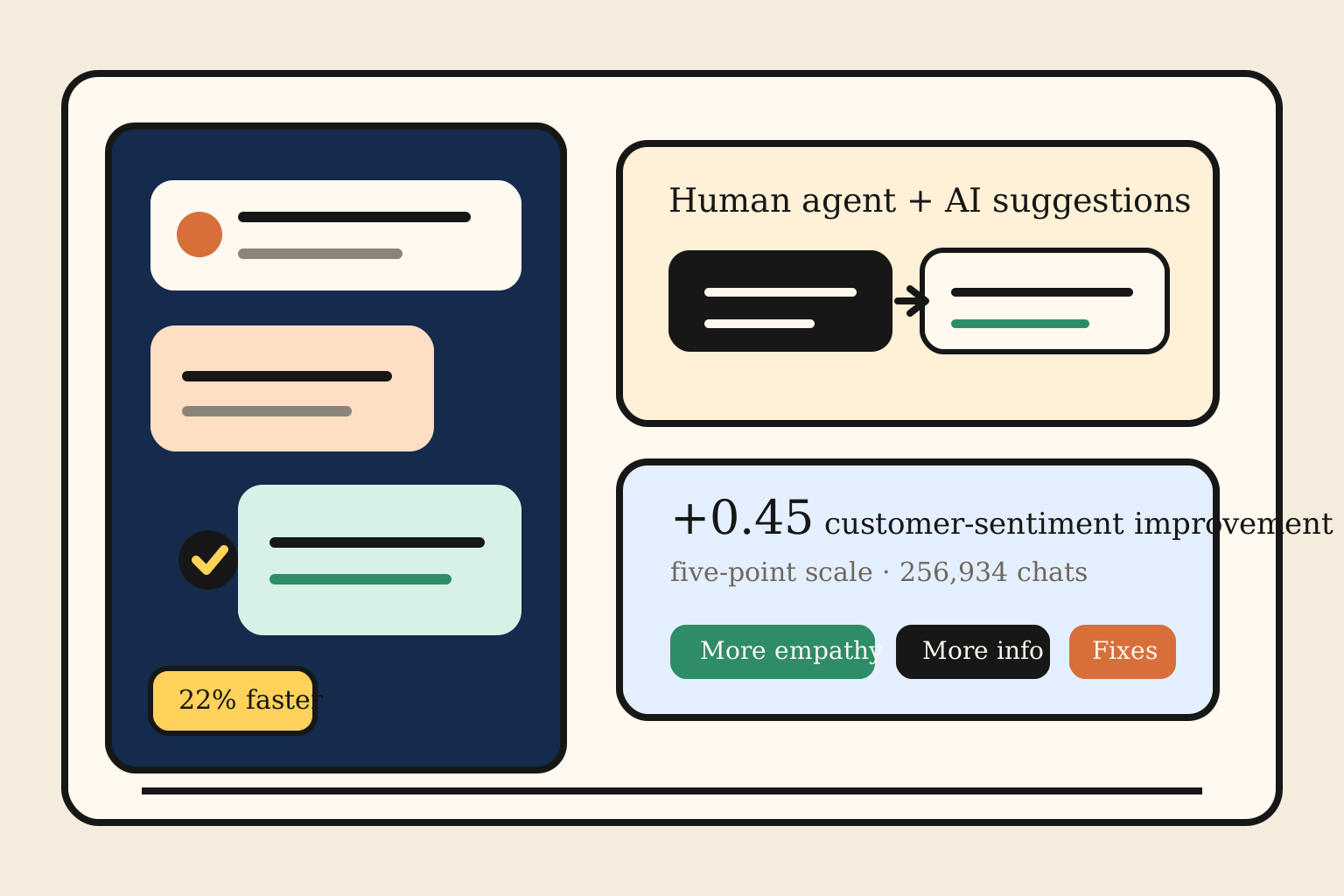
The authors designed a repair system for a large insurer's customer-service chatbot that first diagnosed likely breakdown types, then changed the repair message accordingly. In some cases the chatbot suggested likely meanings, in others it asked for a more specific detail or acknowledged that the request was too brief, too unusual, or too cryptic to parse cleanly. The point was not to make the model sound friendlier. It was to give the customer a clearer next move. 01 / Source noteOvercoming Breakdowns in Customer-Chatbot Interaction: Design and Impact of Collaborative Repair StrategiesMIS Quarterly · 2026What the source supportsMain result: Odds of resolution rose 27.4%; immediate abandonment and negative feedback fellKeep in mindThis was one insurer's chatbot in one service environment. The paper does not prove the same repair design would work equally well in ecommerce returns, airline disruptions, telecom support, tax software, or general-purpose consumer chatbots with different interfaces and stakes.Read the original source ↗
The strongest evidence came from a randomized field experiment on 1,352 real customer interactions in which a conversational breakdown had already occurred. Relative to the non-collaborative fallback, the collaborative repair strategy increased breakdown resolution in the authors' logistic model, with an odds ratio of 1.274 and P=.044. The same table showed a significant reduction in immediate abandonment, with a repair-strategy coefficient of -0.373 and P=.001.
The customer-reaction signals moved the same way, though not all with the same certainty. Among customers who chose to rate the chatbot, those in the collaborative condition left fewer thumbs-down responses on average, 82.80% versus 91.39%, and the adjusted model estimated substantially lower odds of negative feedback. Satisfaction scores were also higher, 2.07 versus 1.82 out of 5, but only 121 customers left that rating, so the paper treats the satisfaction result as suggestive rather than decisive.
What this could change for you
For ordinary users, the believable benefit is not that chatbots suddenly stop making mistakes. It is that the recovery step becomes less annoying. If the system can tell you whether the problem is that your request is too short, too unusual, or missing a crucial detail, you spend less time guessing what wording the bot wants.
For companies, the study points to a narrow but useful design lesson. Better customer-service AI is not only about improving answer generation. It is also about improving what happens after the first failure. A chatbot that recovers more gracefully can keep more people in the interaction long enough to reach the right workflow, form, or handoff.
For the broader everyday-tech conversation, this is a credible low-risk AI result because it measures actual service behavior after a failure, not just intent or preference. The system did not need to make a medical judgment, approve a loan, or improvise legal advice. It only had to help a customer and a chatbot re-establish mutual understanding inside a reversible support interaction.
From research to everyday use
Can you use this yet?
This brief establishes a result in the study’s setting. A consumer-ready version has not been verified here. Applying the finding elsewhere would require access to the relevant tools or data and testing under those conditions.
Check the study’s limitsWhat it does not prove
This was one insurer's chatbot in one service environment. The paper does not prove the same repair design would work equally well in ecommerce returns, airline disruptions, telecom support, tax software, or general-purpose consumer chatbots with different interfaces and stakes.
The intervention was a bundled repair strategy, not a pure test of one sentence or one UI component. The authors combined a breakdown typology, adaptive repair types, adaptive repair messages, and real-time handling logic. That means the study shows the package can help, but it does not isolate which specific prompt, explanation, or diagnostic cue mattered most.
The result also does not mean frustrated customers became happy customers. Breakdown resolution improved, but dissatisfaction remained common. Only 8.95% of customers left a satisfaction rating, and even in the collaborative arm the mean score was just 2.07 out of 5. The honest claim is that the chatbot recovered better from misunderstandings, not that customer service was solved in general.
Primary research
Overcoming Breakdowns in Customer-Chatbot Interaction: Design and Impact of Collaborative Repair Strategies
MIS Quarterly · 2026 · DOI 10.25300/MISQ/2025/18742