What did AI actually solve?
AI did not solve retail inventory in general. It solved a narrower and more useful problem: how to stop human overrides from making an automated stocking system worse. In this large field experiment, a simple two-SKU cap on downward overrides cut excess inventory without sacrificing sales. The honest takeaway is that better human-AI collaboration sometimes comes from limiting discretion just enough to make judgment more selective.
What changed
Smart vending machines are supposed to solve a boring retail problem: how much of each drink or snack should go into each machine before the next restocking trip. In practice, even when a central algorithm makes the recommendation, local workers often still have override rights. They may know about a nearby event, a machine's regular lunchtime pattern, or a competitor opening around the corner. But they can also overreact, second-guess the system, or cut stock too aggressively.
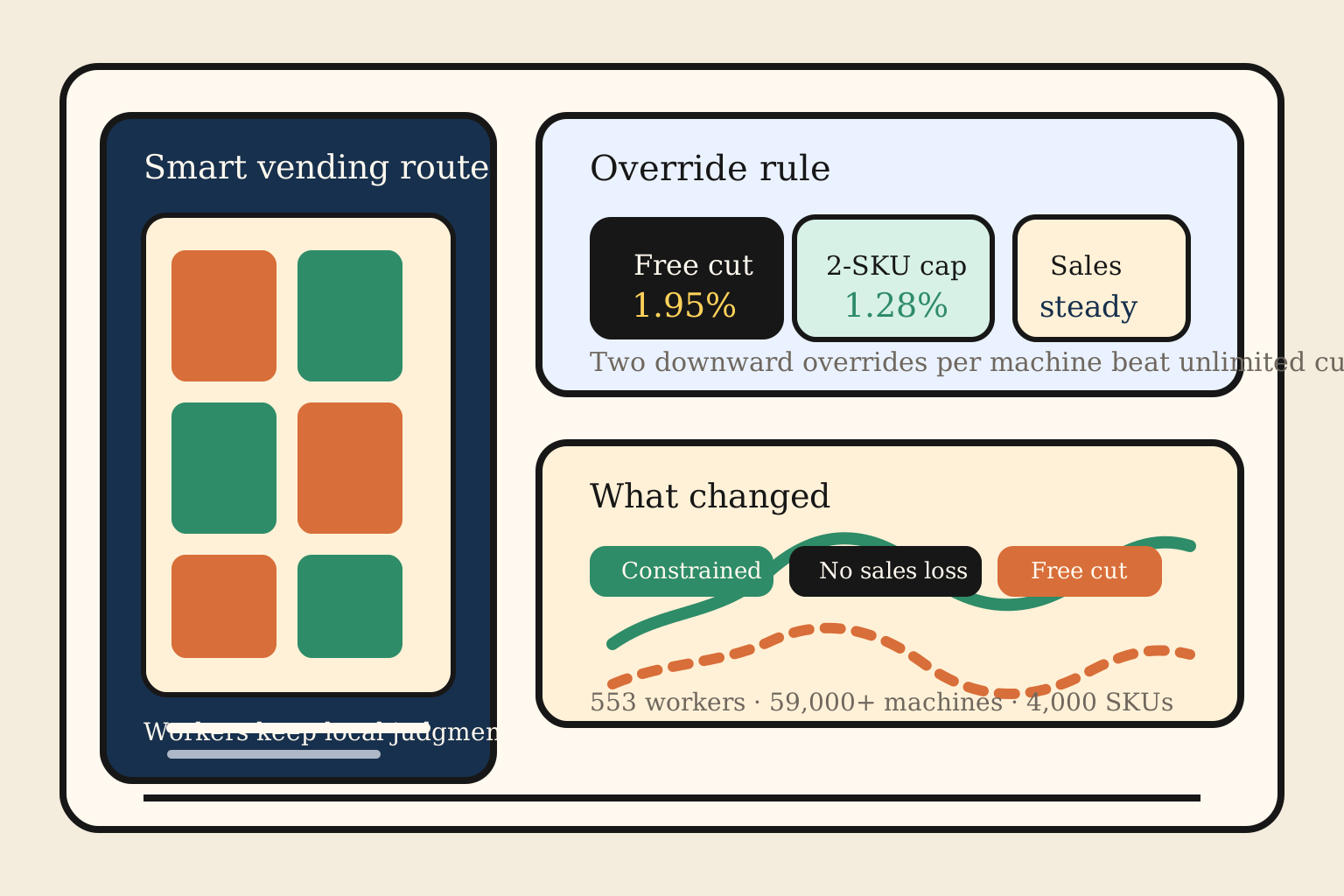
This paper tested whether the problem is not human involvement itself but the amount of discretion around it. Researchers ran a 46-day randomized field experiment at a large Chinese smart-vending retailer. The study included 553 workers managing more than 59,000 machines and about 4,000 SKUs. Workers were assigned to one of three policies: no downward overrides, free downward overrides, or a constrained policy that allowed downward overrides for at most two SKUs per machine while still permitting upward adjustments. 01 / Source noteA Simple Solution to Improving Human Supervision of Algorithms: Evidence from Smart VendingarXiv preprint · 2026What the source supportsMain result: Free overrides cut inventory 1.95% but lowered sales 1.19%; constrained overrides cut inventory 1.28% without sales lossKeep in mindThis was one smart-vending operator in China over a 46-day experiment. The result does not prove that the same override rule will transfer unchanged to grocery stores, pharmacy shelves, restaurant inventory, or other retail systems with different margins, product perishability, and shopper behavior.Read the original source ↗
The unrestricted version looked like the common managerial instinct to let workers step in whenever they want. It did reduce inventory by 1.95%, but it also lowered daily sales by 1.19% and reduced sales probability by 1.38 percentage points. The constrained version performed better. Limiting workers to two downward overrides per machine reduced inventory by 1.28% without reducing sales quantity or sales probability. The paper's core claim is that the cap forced workers to spend their judgment on the highest-confidence corrections instead of scattering it across many weaker ones.
What this could change for you
For people buying from vending machines, this is a small but believable form of AI progress. The paper is not about a robot clerk or a flashy consumer chatbot. It is about whether the machine is stocked with more of the right products and less dead inventory. If a retailer can reduce excess stock without hurting sales, that suggests the system is getting closer to the right mix instead of simply cramming every slot with defensive inventory.
For operators, the practical takeaway is sharper. More human override freedom is not automatically safer. In this setting, unrestricted overrides saved a bit more inventory on paper but also hurt sales. A simple cap performed better because it turned overrides into a ranking problem. Workers still used local knowledge, but they had to reserve it for the cases where they were most confident the algorithm was wrong.
The broader AI lesson is that some gains come from redesigning the workflow around the model rather than rebuilding the model itself. The company did not need a new forecasting system, more personalized information screens, or longer training. It got a useful improvement by changing one rule about how people supervise the algorithm.
From research to everyday use
Can you use this yet?
This brief establishes a result in the study’s setting. A consumer-ready version has not been verified here. Applying the finding elsewhere would require access to the relevant tools or data and testing under those conditions.
Check the study’s limitsWhat it does not prove
This was one smart-vending operator in China over a 46-day experiment. The result does not prove that the same override rule will transfer unchanged to grocery stores, pharmacy shelves, restaurant inventory, or other retail systems with different margins, product perishability, and shopper behavior.
The paper is a recent arXiv preprint, not yet a peer-reviewed journal article. The randomized design and operational scale are strong, but the evidence still needs the scrutiny that comes with external review and possible revision.
The measured outcomes were inventory levels, sales quantity, and sales probability between replenishments. The paper does not directly show less spoilage, higher profit, fewer stockouts noticed by consumers, or better shopper satisfaction. It also reports a simulated personalized policy with a 9.1% sales-probability improvement, but that part was not itself tested in the randomized field experiment.
Primary research
A Simple Solution to Improving Human Supervision of Algorithms: Evidence from Smart Vending
arXiv preprint · 2026 · DOI 10.48550/arXiv.2607.00420